

This post was originally published on this site.
LOCAL gender advocates have welcomed news that work has been completed on a third shelter for victims of domestic abuse.
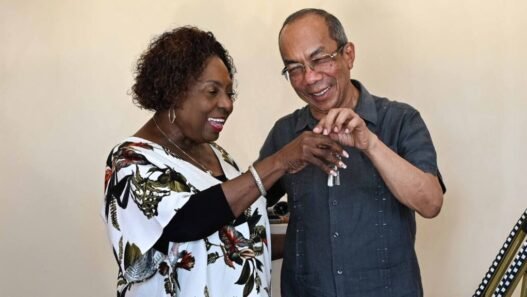
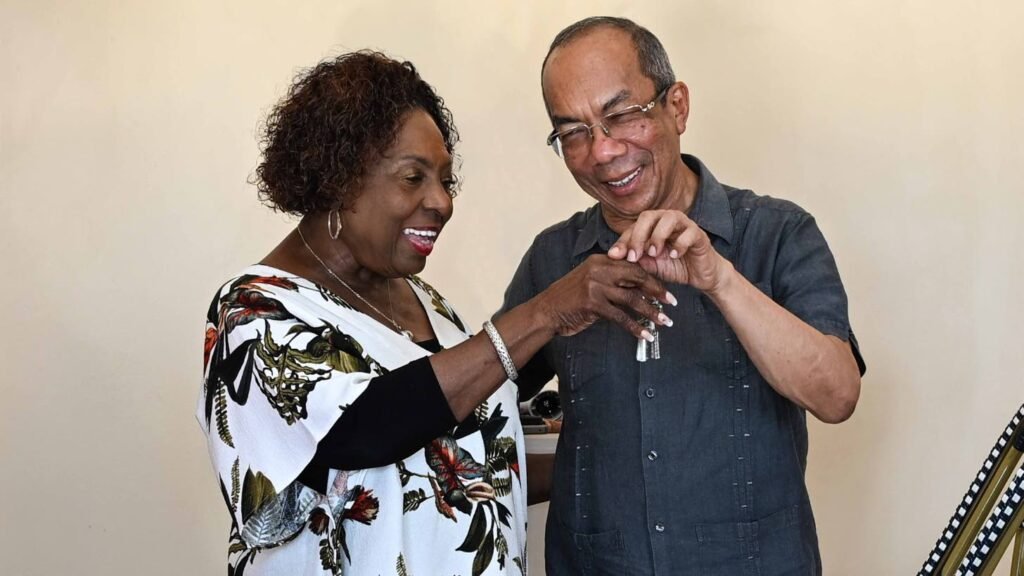
Minister with responsibility for gender affairs Olivia Grange made the announcement last Friday as she toured the facility at an undisclosed location.
“We made a commitment that we would establish three centres, safe spaces for women, and we have achieved that,” said Grange as she pointed out that prior to the Dr Andrew Holness-led Administration there were no State-run shelters for women wishing to leave violent relationships.
In the last few years the Government completed, and is operating, two shelters for women. Grange said the addition of the third shelter will enable the ministry to offer up to 70 safe spaces for women and their children.
Grange said the completion of this third shelter, which is scheduled to begin providing a safe space for women after September 1, enables the Government to provide much-needed services to vulnerable females across the entire island.
“The completion of this space advances the gender agenda, because what we have been able to do now is to provide the spaces across the island, and we are now better equipped that when we get the call we are able to activate the kind of network that is necessary to move [women in abusive situations] into safe spaces,” said Grange.
On Sunday, gender and development practitioner Judith Wedderburn told the Jamaica Observer that the new shelter was long overdue.
“It is certainly very welcome because, not only from my experience but from the reports of women who do suffer, they have been beaten by a male partner and have experienced gender-based violence. The data does show us that it’s not getting better. More and more reports are coming out that it is happening,” said Wedderburn
According to Wedderburn, she became aware of plans to construct the new shelter through discussions with officials of the Bureau of Gender Affairs, however she was uncertain of the completion time.
“I am acknowledging that I have been in meetings in the last couple months where it was reported by somebody from the bureau that a third shelter was going to be built in a different part of the island, outside of Kingston. My understanding was it was going to serve the western part of the island,” said Wedderburn.
Pointing to a recent article published by the Jamaica Gleaner headlined, ‘The cop who finally listened’, Wedderburn said the presence of another shelter in the country serves as a call to action.
“Two women who recounted years of fear after ending abusive relationships are grateful to a corporal for standing with them. What it said was the woman who had been so badly abused was paying tribute to the only policeman who took her report seriously, the only policeman that supported her. And if you reflect on not just this article but other reports, on many occasions, unfortunately, a woman will not gather up the strength to go to a police station to report the incident,” Wedderburn argued.
Welcoming the initiative Joy Crawford, co-founder and executive director of female support group Eve for Life, told the Observer that the move strengthens the national response to gender-based violence (GBV) and expands access to safety for women and children leaving abusive situations.
“We recommend convening a robust, national GBV shelter working group comprising Government, NGOs, community-based organisations and other stakeholders to improve coordination, effectiveness, and accountability across the shelter system. This should include deliberate efforts to strengthen and expand non-government shelter models, recognising that Government cannot do this alone,” said Crawford.
She told the Observer that the country needs more diverse, accessible safe spaces across the island for survivors with different needs, including women with children, women with complex needs, adolescents, and other vulnerable groups.
“NGOs and community organisations play vital roles in victim identification, referral, psychosocial support, and sustained engagement. Formal referral pathways and partnerships can help survivors access appropriate services and safe accommodation earlier,” added Crawford.
For advocacy officer at Jamaica Coalition for a Healthy Society Philippa Davies, the provision of a third shelter by the Government is a commendable initiative but it is unfortunate that the problem of GBV exists.
“It is always better that society encourages, teaches, and supports healthy, safe relationships between men and women. As such, the family is the fundamental foundational institution of any society. The very real need for such places is evidence of family pathology, which is often passed on through generations,” said Davies.
She argued that the Government needs to establish a Ministry of the Family to address the critical role of the family and the need to prioritise its welfare.
“This would include strongly encouraging women and men to exercise discernment when choosing romantic and life partners, and to seek wise advice before and when challenges arise. It is scientifically established that the brain hormones released during sex bonds partners to the point of overshadowing danger signals such as the potential for or the occurrence of abuse,” added Davies who argued that the Government should also consider providing support for men who may be victims of abuse.
In announcing the completion of the new facility Grange said the Government-run shelters not only provide safety but also provide a therapeutic environment for women to rebuild their lives.
“We not only ensure that we protect them, but we help them to gain skills where they don’t have skills, we provide counselling, we have adequate space that we can facilitate a family — mother and children,” said Grange.
She revealed that during the last few years, one shelter hosted a mother and five of her children, while another mother gave birth while residing at another shelter.
Meanwhile, Deputy Prime Minister and Minister of National Security and Peace Dr Horace Chang, acting in his capacity as chairman of the Citizens Business Group — a Government team that is mandated to manage social interventions across the country — said the establishment of Government-run shelters for women has been a big part of a programme to seek to impact, in a positive way, a number of vulnerable communities in Jamaica and, in particular in this case, women who have suffered abuse.
Chang noted that in the past few years the ministry has established domestic violence intervention centres at selected police stations as part of the strategy to eliminate domestic violence.