

This post was originally published on this site.
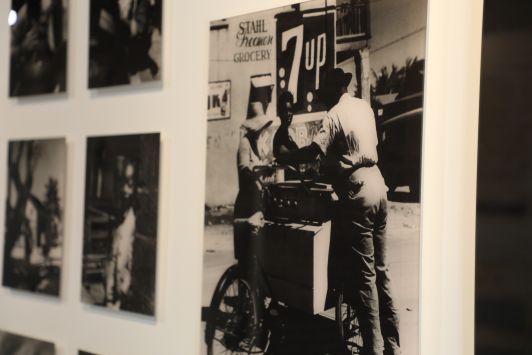
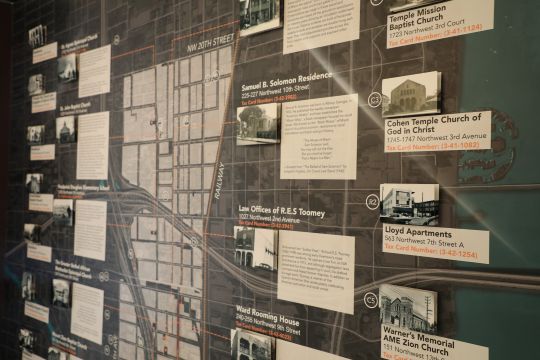
MIAMI – To celebrate Black History Month, the Southeast Overtown/Park West Community Redevelopment Agency (SEOPW CRA) and the City of Miami Planning Department’s Public Art Division invite the community to see Sepia Vernacular: Overtown’s Photographic Journey, 1920–1950, at the restored Lawson E. Thomas Building. This exhibition invites the public to explore Overtown’s history, resilience, and cultural legacy through rare archival photography.
Curated from the archives of the Miami Planning Department, the exhibition features more than 80 historic photographs. These include selections from Max Waldman’s 1947 Color Town series. These images vividly document everyday life in Overtown—its streets, families, businesses, and cultural vibrancy. As a result, the exhibition offers visitors an irreplaceable glimpse into the community’s underrepresented history.
By showcasing stories not often told in mainstream narratives, the exhibition underscores Overtown’s key role in shaping Miami’s identity and highlights why these histories deserve recognition, especially during Black History Month.
Miami-Dade County’s first Black judge
The exhibition is located in the Lawson E. Thomas Building, which is significant in Black history and civil rights. Once home to Miami-Dade County’s first Black judge, it has recently been restored by the SEOPW CRA. The restoration preserved its architectural features and ensured accessibility for future generations.
Adding to the building’s cultural impact is a striking mural by artist Anthony “Mojo” Reed II, titled “Veo Veo, I See I See, Mwen wè Mwen wè.” Miami Museum of Contemporary Art of the African Diaspora (Miami MoCAAD) commissioned the interactive mural to honor Judge Lawson E. Thomas and Overtown’s civil rights history.
Additionally, QR codes link to oral histories, connecting past and present. The artwork visually depicts generational activism, family legacy, and the ongoing fight for justice. This makes the site a living classroom during Black History Month and beyond.
Sepia Vernacular is the first major exhibition to open in the revitalized building, marking a new chapter in preserving Miami’s Black history. It transforms the historic space into a living archive and an active cultural gathering place. Moreover, it underscores the ongoing importance of sharing Overtown’s stories with current and future generations.
“Black History Month is about honoring legacy while creating space for reflection and connection,” said Natalya Sangster, Director of Operations at SEOPW CRA.
“Presenting these photographs in Judge Thomas’s former office—once a hub of civil rights advocacy—underscores how history, place, and identity are inseparable. This exhibition is not just a look back; it’s a celebration of Black resilience and a reminder of Overtown’s enduring impact.”
A Legacy That Shaped Miami
Judge Lawson E. Thomas was a pioneering attorney and civil rights leader. He fought for equal pay for Black teachers, organized Miami’s first “wade-in” at Virginia Key, and challenged Jim Crow laws. As a judge, he presided over Miami’s Black municipal court, standing as a symbol of progress in an unjust era.
Hosting Sepia Vernacular in the building that bears his name is symbolic and restorative. It reclaims space, history, and narrative during Black History Month. This reinforces Overtown’s role in Miami’s civic and cultural story.
Exhibition Details
Sepia Vernacular—Overtown’s Photographic Journey, 1920–1950
Location: Lawson E. Thomas Building, 1021 NW 2nd Avenue, Miami, FL
Hours: Thursday–Friday, 2–6 PM | Saturday, 10 AM–5 PM
Tours: By appointment only – CRA@miamigov.com
The post Celebrate Black History Month and Learn Overtown’s Legacy appeared first on South Florida Caribbean News.