



This post was originally published on this site.
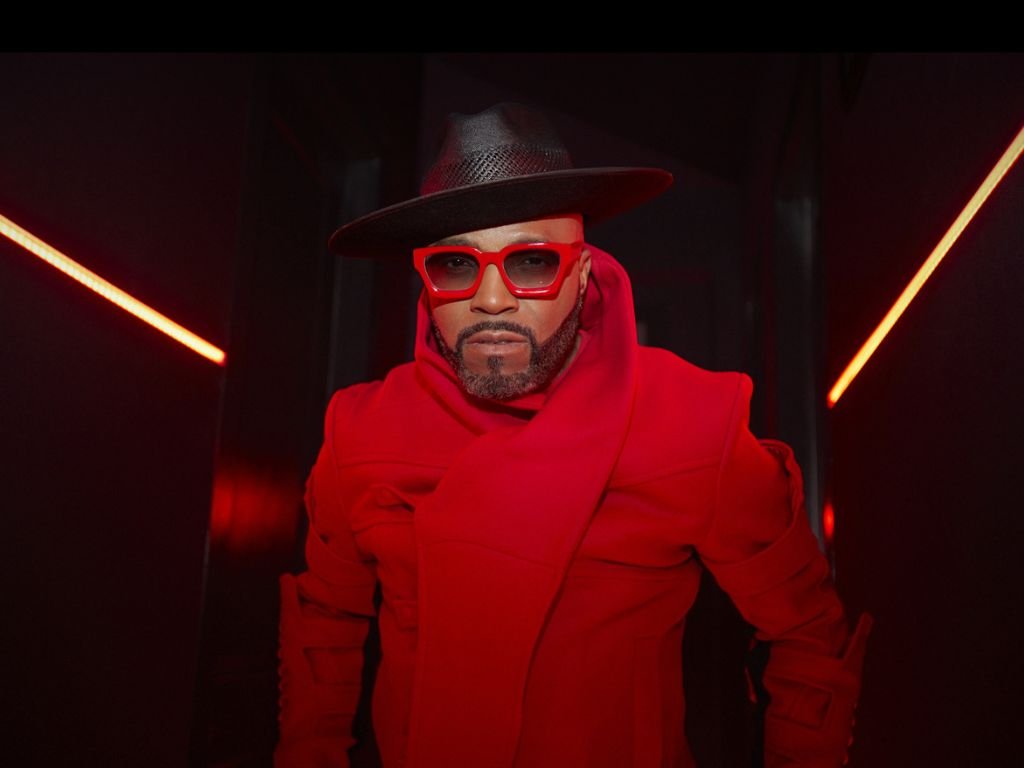
Teddy Riley is not just a hitmaker. The Harlem-born icon is one of the architects of modern Black music. Credited with creating New Jack Swing, Riley fused Hip-Hop’s attitude with R&B melody and pop precision. He defined defined the sound of the late 1980s and 1990s through work with Guy, Blackstreet, Wreckx-n-Effect, Bobby Brown, Keith Sweat, Big Daddy Kane and, of course, Michael Jackson. His new memoir, Remember the Times, arrives as both a career retrospective and a correction to the record. The book traces Riley’s rise from Harlem’s St. Nicholas Houses to global superstardom. The road was not without bumps along the way, as he revisits the industry betrayals, creative battles and personal heartbreak that shaped his journey.
Chuck “Jigsaw” Creekmur finally links with the genius on numerous matters.
This is important, because Riley looms as the cornerstone of multiple cultural histories at once. He was there in Harlem’s streets and Hip-Hop collided, before heavies like Doug E. Fresh and Kool Moe Dee got on wax. He helped Big Daddy Kane turn into a commercially dominant artist and was ground zero for Pharrell Williams’ success. His talents carried deep into the mainstream with Dangerous-era Michael Jackson, but Creekmur and Riley explain why he did not make it on the Bad album. If the genre has often failed to properly document its own builders, Riley’s memoir feels like a necessary act of testimony.
Below is an edited interview of the conversation between Chuck “Jigsaw” Creekmur and Teddy Riley, but watch the video for the full, raw version.
Teddy Riley Talks Remember the Times, Michael Jackson, Industry Betrayal And Why Streaming Is “Not The Way To Go”
Chuck Creekmur: You told me about this book more than a year ago, and I’ll be honest, people tell me a lot of things that never happen. But here it is. Why now?
Teddy Riley: Spiritual timing. I felt like I wasn’t ready. We had the book about 12, 12 and a half years. But this is my 40th year in the business, so I said this is the time.
Chuck Creekmur: One of the things that hit me early was your beginnings in New York. A lot of people know the icon, but not the young Teddy Riley in Harlem, in that 1970s and 1980s explosion.
Teddy Riley: Oh yeah. That was around the same time of going to Harlem World. I was going there as a hustler. Being in the streets, we were big fans of all the rappers, whether they made a record or not. There were rappers who never made a record and we were still fans of theirs.
Growing up, I would see Heavy D, Doug E. Fresh, Furious Five, Disco 4 Plus One More, Dr. Jekyll and Mr. Hyde, Andre Harrell. Never knew I would be working with Andre years later. Never knew I’d be working with Big Daddy Kane, Kool Moe Dee. I was there when Kool Moe Dee had the battle with Busy Bee. I was in the building.
Chuck Creekmur: Hip-Hop’s first major battle.
Teddy Riley: Definitely. And I felt like it wasn’t fair. You talking about a party rapper and one of the most educated rappers in the business. It wasn’t fair.

Chuck Creekmur: You also mention Rich Porter, Alpo, Doug E. Fresh, D. Ferg, a lot of Uptown names. That’s a wild intersection of music and street history.
Teddy Riley: Rich Porter and I went to Martin Luther King, along with Doug E. Fresh, D. Ferg and a lot of other street celebrities. Uptown celebrities. We all used to go to the Rooftop, which used to be just a roller skating rink until we developed it to be a record label.
We signed Kool Moe Dee, Rap’s New Generation, Classical Two. Kids at Work before Kids at Work, we were called something else. Then I was in another band called Total Climax. None of those records made it. That’s what made me quit doing R&B and stay with rap and just working with everybody in the projects.
Chuck Creekmur: That’s important, because people think of you as R&B royalty, but you saw yourself as a Hip-Hop producer first.
Teddy Riley: Oh yeah. We were Hip-Hop before we even got into the business.
Chuck Creekmur: You even said you felt overlooked during Hip-Hop’s 50th anniversary celebrations.
Teddy Riley: We wasn’t recognized. Wreckx-n-Effect wasn’t recognized, and we sold more records than a lot of people that was on the list. We weren’t invited to any of the events, the ceremony. I guess, and I’ll put it the way the guys put it, they invite us when they see us. Out of sight, out of mind.
A lot of people felt a way about the 50th. I don’t think it was anyone’s fault. I just think the wrong people were driving the car.
Chuck Creekmur: But you did get one meaningful call.
Teddy Riley: Lyor. He was probably the only one to acknowledge that I belong, because he did call me personally. That’s one person who really acknowledged me.

Chuck Creekmur: The book gets heavy when it gets into Gene Griffin. You called him Suge Knight before Suge Knight.
Teddy Riley: That’s the truth. But if it wasn’t for Gene Griffin, I probably wouldn’t be sitting here with you. You have to have some sort of stepping stone, somebody to bring you in the business. Gene was a part of me being in the business earlier with Kids at Work and Total Climax.
But I really think I could have bypassed Gene Griffin and still got this story because I knew Andre Harrell before Gene Griffin, before everybody.
Chuck Creekmur: You also reveal how badly you were getting robbed.
Teddy Riley: When things happened with him and Andre, I felt like then I should plan my leave. I did that. I just needed more information, which I got from one of Gene’s guys. He spilled his guts to me and said, “You’re supposed to be getting paid more.”
I realized I was making like $200,000 to $250,000 a song, and from $75,000 to $100,000 on remixes, and I was only getting $10,000. It was just like, wow.
Chuck Creekmur: And yet you still write about forgiveness.
Teddy Riley: I have a chapter in my book called “Forgiveness.” It talks about my forgiveness for a lot of people. Doing that just made me a better person spiritually. I feel like that’s how I’m still here today.
Chuck Creekmur: Let’s talk Guy. You say if Timmy Gatling had never brought Gene back around, Guy might still be together.
Teddy Riley: I really feel that. Timmy was one of the forces of Guy along with Aaron and myself. I think Guy would still be together today. The way it went, dealing with two brothers, it would always be two against one. That’s why I felt outnumbered, even though I was the record company and the producer of everything.
Chuck Creekmur: It sounds like at first you were moving equally, then you realized your worth.
Teddy Riley: Exactly. At the beginning I was doing it equal until I realized my worth and people kept saying, “You don’t know who you are.” Then when that started becoming reality, I started saying, yeah, I deserve what I’m supposed to get. I got to stand on business.

Chuck Creekmur: One of my favorite parts of the interview is when we get to Michael Jackson.
Teddy Riley: I learned a lot from him. Basically how recordings go, the traditional way. Writing a song the traditional way. No drum machines, no nothing, just a piano. You’re just going at it. Then after you get all the data, now you go in the room and it’s like you’re in an amusement park.
That’s what happened with us. We wrote a lot of songs in a room with an upright piano, him singing, and us coming up with melodies and different things like that.
Chuck Creekmur: And then there’s the part where you say Gene sabotaged you being on Bad.
Teddy Riley: Yeah, that was crazy. When Michael brought that up to me, I was like, “Oh God, I could have been.” But Gene was afraid of Michael stealing me. He was intimidated. He felt like, “I can’t let him get close to this person.” That was my godfather, so I can understand how he felt. Like, “Nah, I’m going to lose my jewel, my gold, my Midas.”
But it wound up happening anyway.
Chuck Creekmur: You also addressed that viral Michael photo situation in the book in a very Teddy Riley way.
Teddy Riley: There have to be something in the book for people to talk about, and I gave people a lot to talk about. This is one of them. So I’m going to let them keep talking.
The true picture, the picture Michael asked me to take, is the only picture I took with him solo. That will give you an answer.
Chuck Creekmur: You were smooth with that one.
Teddy Riley: It keeps it on the radio.
Chuck Creekmur: You also said something big about New Jack Swing. You were clear. You created it.
Teddy Riley: I’m the creator of the music starting New Jack Swing, yes. People say it’s Keith or this person. I been doing New Jack Swing before all of everybody existed. When I did Rap’s New Generation and those records with “The Show,” I would say Doug E. Fresh is a part, but if you’re the artist and I’m the producer, who’s the creator?
Some people think being a part of it is the same thing when it’s not. I hold the title. I hold the trademark. No one can say it’s theirs. They can say, “I was a part of that.”
Chuck Creekmur: You also made news here by apologizing to Blackstreet.
Teddy Riley: I want to apologize to those guys for calling them names or things like that. I started those guys and I felt like they broke my heart. When your heart is broke, you say negative things, and that’s not me. That’s really not me at all.
Even though we’re not on good terms or great terms or even terms period, it’s never been me. Everybody knows my heart. I don’t like conflict. But when you bring it to me, I got to give it back to you.
Chuck Creekmur: Before we wrap, you went all the way left and gave one of the most interesting takes of the whole interview.
Teddy Riley: Streaming is not the way to go. Podcast is the future. Infomercials are the future. I did it with Blackstreet. Now it’s so easy to do it. Why people are not doing it? Because they’re sticking their music and their content on the freebies.
They should be going direct to consumer. Go back to tangibles. Vinyl. Books. CDs. Put an encrypted code on the vinyl if you want them to hear it digitally, but it’s only for them. The technology is here.
Turn your music into a book. The cryptic code is right on there. Go listen to the record. There’s different ways. Instead of putting it on IG and TikTok, they’re taking too much of your intellectual property.
Chuck Creekmur: And when I asked about the next generation, you didn’t blame the kids.
Teddy Riley: No. I feel like it’s getting back to it because the schoolers are schooling. The middle layers are taking their place. We’re now becoming the mentors and taking accountability. We did not step up to the plate for them like the legends before us stepped up to the plate for us.
That’s why everybody got a complaint about Gen Z. I don’t complain at all. I can’t knock the music because my music was knocked before it first came out. We have to step up. We’re not doing what we supposed to do for these young kids that are inspired by us. We’re not helping them.
If we want to see the next you and the next me, we have to birth them.