
This post was originally published on this site.
Highlights
- Hostilities continue across region: Strikes and counter-strikes continued across multiple fronts, posing ongoing risks to civilians, infrastructure and essential services.
- Global food security concerns grow: WFP cautioned that disruptions to supply chains, and rising energy and fertiliser costs could push millions more into hunger if the crisis persists.
- Energy and trade disruptions deepen: Attacks on energy infrastructure and reduced shipping through the Strait of Hormuz are keeping oil prices elevated and disrupting global trade and logistics.
- Humanitarian needs continue to rise: Aid agencies report growing displacement and worsening conditions for vulnerable populations, with access constraints and rising costs hampering response efforts.
- Impacts spread beyond the region: We’ve done some in-depth original reporting this week looking at how countries far from the Gulf, such as Nepal, Sri Lanka, Pakistan, Myanmar and Afghanistan, are facing rising fuel costs, supply disruptions and economic pressures.
By Vibhu Mishra
NEW YORK, USA – The crisis in the Middle East continues, with strikes and counter-strikes reported across the region, driving civilian casualties, displacement and rising humanitarian needs. Energy assets in Gulf States continue to be hit, with serious long-term damaged reportedly sustained at Qatar’s Ras Laffan gas hub.
Oil prices remain above $100 a barrel, underscoring the growing global economic impact. Stay with us for live updates from across the UN system.
Air travel disruption adds to economic losses across Middle East
Airspace closures and security risks linked to the conflict have forced widespread flight cancellations across major Gulf aviation hubs, according to analysis by the Economic and Social Commission for Western Asia (ESCWA) – UN’s development arm for the region.
The two weeks – from 28 February to 12 March – saw more than 18,400 flights were cancelled across key airports, including Dubai, Doha, Abu Dhabi and Riyadh. Some hubs experienced near-total shutdowns in the early days of the escalation, with operations only gradually resuming.
ESCWA estimates airline revenue losses at nearly $1.9 billion in the first 12 days alone, with potential losses rising to $3.6 billion within a month if disruptions continue.
The disruptions are further straining regional transport and logistics networks, with knock-on effects for trade, tourism and economic activity.
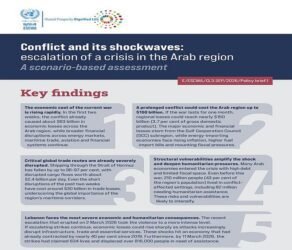
Conflict and its shockwaves: escalation of a crisis in the Arab region – A scenario-based assessment – March 2026. (conflict-shockwaves-escalation-crisis-arab-region-english)
The present brief assesses the impacts of the escalating war in the Arab region. Losses could rise from $63 billion within two weeks to nearly $150 billion in one month (about 3.7% of regional gross domestic product), weakening growth, straining fiscal stability and intensifying humanitarian pressures in a region where 210 million people live in conflict-affected settings and 82 million require assistance.
While Gulf economies are facing the largest aggregate losses, more vulnerable countries, including Lebanon, are likely to face the most severe consequences. The brief highlights the need for stronger regional preparedness and coordination to contain spillovers and protect essential services and supply chains.
Middle East war shockwaves ripple through Asia-Pacific fuel and supply chains
The fallout from the war in the Middle East is rippling far beyond the Gulf, disrupting fuel supplies, shipping routes and supply chains across Asia and the Pacific, with some of the region’s most vulnerable economies already feeling the strain through rising prices, rationing and threats to jobs, food security and remittances.
The immediate impact is visible in sharp increases in transport costs, energy and fertiliser prices, alongside currency pressures and financial market volatility.
Middle East war shockwaves ripple through Asia-Pacific fuel and supply chains

The post Energy shocks deepen as strikes hit infrastructure appeared first on Caribbean News Global.