
This post was originally published on this site.
- St Lucia records first case of Chikungunya virus
- Members of the public are advised to ensure that roof gutters and downpipes used to collect rainwater are kept clean
By Caribbean News Global 
CASTRIES, St Lucia – “Our public health teams are actively investigating and implementing measures to prevent further spread of the Chikungunya virus,” cites the ministry of health press release, March 5, 2026, of a confirmed case, … the first laboratory-confirmed case of Chikungunya virus (CHIKV) in Saint Lucia, since 2021.”
“The individual was hospitalised for four days and received supportive care. He showed clinical improvement and has since been discharged home in stable condition, having made a full recovery. At this time, no additional cases have been identified in country, the minister of health said.
Ministry of health non-definitive information
The chikungunya virus cannot be spread from one person to another and requires the presence of the mosquito. Because the vector requires water to breed, prevention focuses on eliminating breeding sites.
Subject to the ministry-reported case, the non-reported case position, given the confines of Saint Lucia’s landscape, nationals are blind to knowing if the case is domestic and/or externally related. To which, someone may very well be walking into an unknown surveillance and infected area, unaware of pertinent risk dynamics.
In other words, the ministry of health is not helping with definitive public health decision-making for preventative measures.
Saint Lucia is experiencing severe drought conditions, amid widespread concerns about the status of WASCO’s operation, ‘moving purposefully towards mitigating the vulnerability of the water sector,’ to which the government is well-endowed without restrictions.
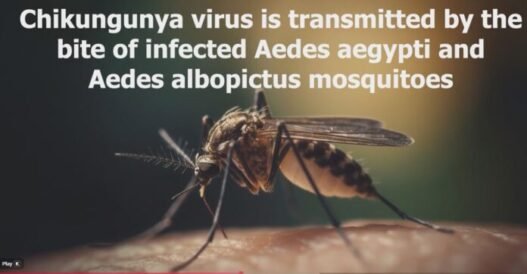
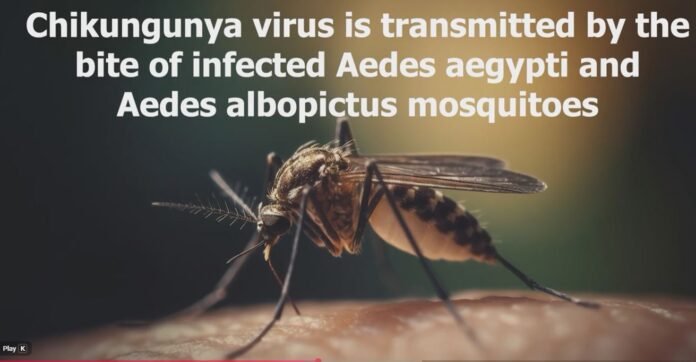
Therefore, where on the island are the breeding grounds that facilitate Chikungunya virus transmitted by the bite of infected Aedes aegypti and Aedes albopictus mosquitoes, the same mosquitoes that transmit the Dengue and Zika viruses?
“ The common symptoms include fever, severe joint pain, headache, muscle pain, and rash. While most people recover fully, joint pain may persist for weeks or months in some cases,” to which the ministry of health response, notes. “Our public health teams are actively investigating and implementing measures to prevent further spread of the Chikungunya virus. Surveillance has been enhanced to detect and respond to additional cases, and vector control operations are underway to reduce mosquito populations in affected areas. Healthcare providers have also been alerted to identify and report suspected cases promptly.”
According to the World Health Organisation (WTO), prevention and control:
“The main method to reduce transmission of CHIKV is through control of the mosquito vectors and reduction of mosquito breeding sites. This requires mobilisation of communities, who are critical in reducing mosquito breeding sites through emptying and cleaning containers that contain water on a weekly basis, disposing of waste, and supporting local mosquito control programmes.”
Subject to the ministry-reported case, and the water crisis: Is there a disposing of waste crisis that is unidentified, and contributing to “breeding sites” for the chikungunya virus?
February 11, 2026, The Pan American Health Organization, (PAHO) issued an epidemiological alert following a sustained increase in chikungunya cases in several countries in the Americas since late 2025 and into early 2026. The alert also highlights the re-emergence of local transmission in areas that had not reported virus circulation in several years.
“Chikungunya spread across the Americas in 2013, and after years of low transmission, we are now observing a resurgence, particularly in the Intertropical Zone where Aedes aegypti is present,” said Sylvain Aldighieri, director of communicable diseases prevention, control, and elimination at PAHO.
“Chikungunya can also cause chronic joint pain, which may last from weeks to several months in about 60 percent of cases. There is no specific antiviral treatment; acute symptoms are managed with analgesics and antipyretics. High-risk patients should be assessed by health professionals for potential hospitalisation and monitoring to prevent severe complications and fatalities.”
PAHO’s key recommendations include:
“ The use of repellents, bed nets, and clothing that covers arms and legs; avoid mosquito exposure in areas with active transmission (especially at dawn and dusk); and ensure rest and home care for patients with chikungunya under bed nets to prevent bites and further transmission. Community participation in eliminating mosquito breeding sites through simple measures, such as emptying, covering, or discarding containers that collect water, is also essential.”
Safe water harvesting and storage practices

Meanwhile, the minister of health advised the public to ensure that roof gutters and downpipes used to collect rainwater are kept clean, in light of the current dry conditions and the increasing risk of water supply shortages.
“However, unsafe collection and storage poses serious health risks if not properly managed. Additionally, water storage containers, including drums, buckets and tanks should be covered or fitted with tight-fitting lids or screens to prevent vector breeding, particularly mosquitoes and rats. Open or poorly maintained containers increase the risk of Dengue fever, Chikungunya, Zika, and other vector-borne diseases. To prevent algae growth and bacterial contamination, it is necessary that water storage containers are cleaned on a regular basis and kept out of direct sunlight and away from chemicals.”
“The Environmental Health Division also advises the public to exercise caution when harvesting or collecting water from unofficial sources, including roadside springs, unapproved wells, and surface water sources. These sources are not routinely monitored or treated and may be contaminated by animal waste, agricultural runoff, or sewage. Water collected from such sources should not be used for drinking or food preparation unless it has been properly treated.”
According to the ministry of health:
“Water conservation is essential, but safety must always remain our priority. Testing for the chikungunya virus is available in Saint Lucia, and the ministry of health urges anyone who may be experiencing signs and symptoms to seek care at their nearest Community Wellness Centre.”
In the playbook of COVID-19, is there an infectious disease centre at the ready to protect an extractive and predatory plantation-type tourism industry? And what are the safeguards that “put the people of Saint Lucia first” from an increased risk of Dengue fever, Chikungunya, Zika, and other vector-borne diseases?
Clearly, continued secrecy is not the first defence in public health care!

The post St Lucia records first case of Chikungunya virus since 2021, amid increasing risk of water supply shortages appeared first on Caribbean News Global.