This post was originally published on this site.
NEGRIL, Westmoreland — Though satisfied with updates provided to stakeholders last Thursday, Negril Chamber of Commerce director, hotelier Daniel Grizzle has called for quarterly updates on the US$450-million Western Water Resilience Project to ensure it remains a top priority.
“It seems to be under way but we shouldn’t ease up until the water is actually in the tap,” said a strident Grizzle.
He was speaking with the media following a closed-door meeting held at the Boardwalk Shopping Village James Hunter Event Centre.
Grizzle’s comments were influenced by memories of failed promises on other projects, alongside the lingering pain of the 2024 water crisis, which stemmed from severe drought conditions and forced hoteliers to spend more than $200 million on purchasing trucked water.
Following an outcry from the resort community, the Government pledged to permanently resolve the issue and the Western Water Resilience Project has been touted as the fix.
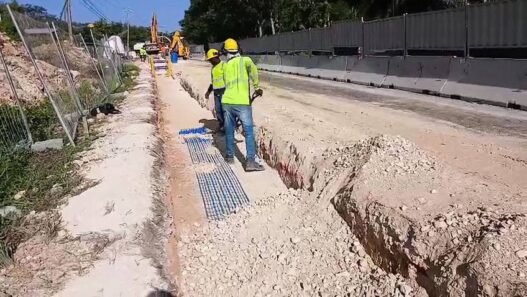
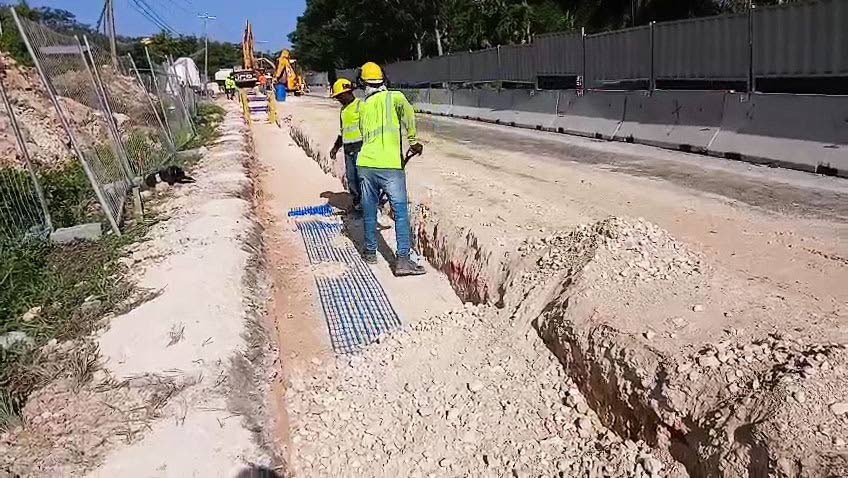
Launched last July, the project’s first phase involves replacing 67 kilometres of ductile iron pipelines and is currently 17 per cent complete. Work is being done by French firm Vinci Construction.
“Work is visibly under way in the section of Hospiten in Montego Bay, along Long Bay Walker Road, and heavily visible in the vicinity of Lucea, with engineering assessments occurring at various points along that corridor,” Water Minister Matthew Samuda told reporters after the meeting.
Phase two of the project is expected to begin next May and will be done in parallel with the first phase. It will involve upgrading the Martha Brae treatment plant in Trelawny and the Great River treatment plant on the Hanover/St James border, alongside improvement works at the Logwood treatment plant in Hanover.
Phase three will see the construction of new treatment plants at Roaring River in Westmoreland — with connectivity to Negril and its corridors — and a treatment plant in Rio Bueno, St Ann to assist with east-west connectivity into western St Ann and link to the Martha Brae entry point.
Plans are also under way to construct storage facilities and expand existing reservoirs, such as the terminal reservoir in Montego Bay, while Negril is set to receive several hundred thousand gallons of new storage capacity to bolster resilience.
The five-year project is funded entirely through the Government’s Consolidated Fund with no attached loans, forming a critical nation-building initiative intended to resolve severe, long-standing challenges.
Samuda emphasised that upon the project’s completion, the Negril area will experience a significantly more reliable water supply.
“We were losing millions of gallons along a leaky pipe network before. This will significantly reduce line losses. That’s on the phase one side. On the phase two side, we’ll be adding 10 million more gallons a day along the corridor from Martha Brae to the West End of Negril,” he said.
Chairman of the Negril Destination Assurance Council Richard Wallace welcomed the outcome of Thursday’s meeting, noting that it not only provided an update on the water project but also provided insight into other initiatives.
Among the issues discussed were the beach park, the Royal Palm Reserve, a critical sewage plant for the resort area, and the airport project for Little London.
“We were very thrilled. I think most members left here feeling happy that Negril is not abandoned, that Negril is being thought of by this Government, and that there are projects under way. Some of these projects are in various stages of advancement,” stated Wallace, who hopes to avoid a repeat of the 2024 scramble for water.
“I am counting on things improving. They’re spending a lot of money, millions of dollars, on this project, and I’m sure that, in their wisdom, they would have identified the problems that we’re having in this area, and this spend would be to solve those problems. I’m hoping that when this project is complete, we will not have water supply issues to this area for the next 20 to 50 years,” stated Wallace.
During the meeting, stakeholders called for stronger environmental protection, particularly for the Negril morass, which is vital to the local tourism product. They also stressed that the water project should benefit residential areas as well as commercial zones, ensuring households have reliable tap water. One such area is the West End, where roughly a kilometre of 10-inch pipeline was replaced two years ago, though some pockets continue to face service challenges.
“The area is served by Logwood which is having challenges because of the lower inflows, so they’re on a regulated supply. And what has happened is that when it is their time to be supplied, we’ve had energy issues,” explained Samuda.
Wallace noted that Logwood was a major focus of discussions due to concerns about the reliability of Jamaica Public Service Company (JPS) supply.
Samuda informed the meeting that JPS has committed to providing a timeline for upgrading its system — not just at Logwood, but at other National Water Commission plants islandwide — to permanently resolve single-phase supply issues.
Another issue of concern for Negril is the generator at the Logwood plant, which was destroyed by fire during the passage of Hurricane Melissa last October.
“We are completing the procurement process and we expect to have that generator installed before the end of the year, which will significantly reduce the issues associated with the supply for the customers of the Logwood system,” Samuda told the media, noting that the fire was a result of vandalism.
Although the pipeline project is scheduled for completion in two years, Wallace expressed hope that it will be completed before then.
“While we would have loved for it to come through faster, these things take time. It’s a lot of work, a lot of disruption, a lot of infrastructure that needs to be done. We just have to work with the timeline and hope that there are no delays,” he stated.