



This post was originally published on this site.
A very steep lot becomes usable when the grade is divided into stable levels, connected by safe paths, and built around clear activities. The best backyard hill ideas combine drainage, structural support, planting, and gathering areas so the finished yard looks natural.
Celebrity yards may appear relaxed on camera. Hidden below the view are walls, drains, stairs, and graded surfaces that hold soil and provide level areas for dining or events.
A very high-profile backyard may host family time, photo shoots, and music-industry gatherings. Luxury landscapes feel quite effortless because difficult terrain becomes an intentional sequence of outdoor rooms.
How Do You Landscape a Steep Backyard Hill?
Map the grade, soil, sunlight, runoff, and access points. Structure comes before plants or furniture. Professionals may recommend:
- Custom retaining walls
- Reinforced planting zones
- Several lower walls
A steep slope can be treated as an opportunity for layers. Its guidance includes walls, terraces, raised beds, and stairs that create pocket gardens. Lower plants can preserve views, while taller shrubs near the house draw the eye upward.
Deep-rooted shrubs, spreading groundcovers, and repeated perennials can cover soil and create a polished rhythm.
How Can You Make a Sloped Backyard Usable?
Create level destinations instead of treating the hill as one incline. Backyard terracing can form a:
- Dining area
- Fire-pit lounge
- Garden
- Play zone
- Event space
Each level needs room for furniture, movement, and safe circulation. Architectural Digest features:
- Separate lounges
- Built-in benches
- Sunken seating
Emma Chamberlain’s Los Angeles yard includes a lounge between the hill and house, proving an awkward transition can become a focal point. A practical plan may include:
- An upper dining terrace near the kitchen
- A middle lounge with fixed seating
- A lower garden or recreation area
- Steps with landings and handrails
- Lighting at each elevation change
Repeated materials help separate levels feel visually connected.
Build the Structure Before Styling the Scene
Retaining systems support successful backyard hill ideas. Wall height, footing depth, soil pressure, frost, and water movement affect performance. Drainage stone, filter fabric, and directed runoff matter as much as the finish.
Materials should suit the home. Natural stone fits wooded settings.
Concrete sharpens a modern property. Timber may work for smaller tiers when codes and conditions allow it.
Homeowners considering custom retaining walls in Kalispell should place engineering and drainage ahead of decoration. A wall must manage the land before improving the view.
Use Planting to Soften Sloped Yard Landscaping
Strong sloped yard landscaping blends structure with plants that look established. Large beds, repeated masses, and restrained colors create a cleaner result than small varieties.
Emphasis is placed on practical spaces and low-maintenance approaches. Similar thinking works on hills. Fewer plant types can lower upkeep and strengthen the yard’s identity.
Groundcovers can edge steps. Shrubs can frame views. Small trees can mark terrace transitions.
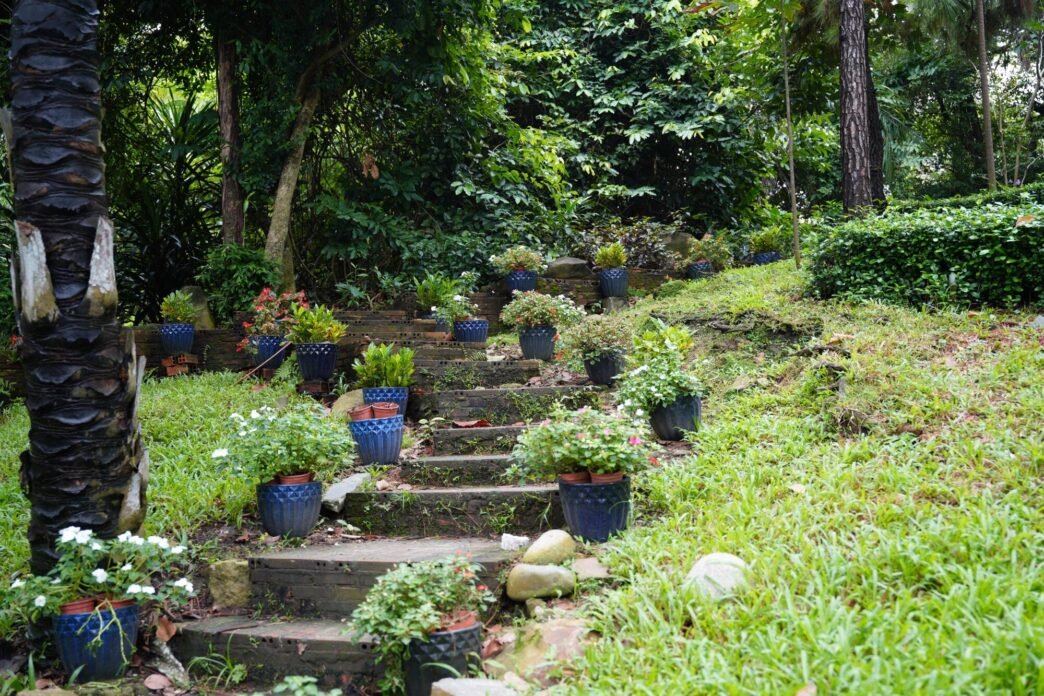
BuzzFeed also notes that container plants create visual levels around hard surfaces. Matching planters can connect distant gathering areas.
Turn Each Terrace Into an Outdoor Living Space
A flat platform alone does not create an outdoor living space. Comfort, shade, circulation, and purpose determine whether guests use it.
Homes & Gardens presents Tim McGraw and Faith Hill’s patio as an extension of indoor living. Durable furniture, ample seating, side tables, simple colors, and layered lighting support year-round comfort.
Useful zones include:
- Dining near food service
- Conversation seating beside a wall
- A protected fire feature
- A quiet daybed
Built-in benches and sunken lounges can create intimacy while saving floor space.
Let Hillside Home Design Guide the Layout
Effective hillside home design connects indoor rooms to the right outdoor level. Doors, windows, rooflines, and views should shape terrace placement.
A dining terrace near the kitchen improves service. A lower lounge may capture sunsets or add privacy.
Paths should follow natural movement.
Wide steps fit main entertaining areas. Narrow garden stairs serve quieter zones. Landings create pauses and make climbs feel shorter.
Lighting deserves equal attention. Globe lights for atmosphere and solar fixtures along paths are recommended. Consider starting with functional lighting.
Step, wall, and low path fixtures guide guests without flooding the landscape with glare.
Frequently Asked Questions
What Plants Work Best on a Backyard Hill?
Choose plants for the soil, climate, sunlight, and irrigation available on each level. Deep-rooted native shrubs and spreading groundcovers can protect exposed soil after establishment.
Place drought-tolerant plants near the top, where soil often dries faster. Moisture-tolerant choices may perform better near lower drainage areas. Local extension guidance can help homeowners avoid invasive species and select plants carefully suited to regional conditions.
Small accent groups can add seasonal color. Grouping plants in clusters rather than scattering them individually can also improve erosion control and create a more cohesive visual flow across the slope.
Does Every Sloped Yard Need a Retaining Wall?
No. Gentle slopes may be managed with:
- Dense planting
- Erosion-control materials
- Shallow swales
- Careful grading
Steeper grades and level patios may require engineered support. Wall needs depend on:
- Soil
- Height
- Water pressure
- Nearby structures
- Local rules
Seek professional guidance when failure could affect a:
- Home
- Neighboring property
- Occupied area
Proper drainage design is often just as important as the wall itself, since unmanaged water can undermine even well-built structures. In many cases, permits and engineering reviews are required before construction begins to ensure long-term safety and compliance.
How Do You Maintain a Terraced Backyard?
Inspect walls, drains, steps, joints, and planted slopes seasonally. Clear blocked outlets and repair bare soil before erosion spreads. Replace washed mulch and keep roots away from drainage openings.
Prune plants so paths and handrails remain visible. Test lighting before gatherings. Prompt repairs protect the structure and preserve the appearance of every level throughout every season.
It is also helpful to schedule maintenance after heavy rain or seasonal freeze-thaw cycles to catch early signs of movement or wear. Keeping a simple recurring checklist ensures small issues are addressed before they become costly repairs.
Explore More Backyard Hill Ideas for a Smarter Landscape
The best backyard hill ideas unite stable construction with welcoming places to gather. Terraces, stairs, planting, drainage, and lighting should operate as one system. Celebrity yards look effortless because practical details stay quiet while the experience takes center stage.
Explore more of our guides and articles for fresh perspectives on celebrity homes, lifestyle trends, entertainment, and culture.