This post was originally published on this site.
Twenty long years ago, Rick Ross arrived with Port of Miami, his debut album, and an created unmistakable space. At a time when rap was unimaginably competitive, Ross carved out his own lane with a hunting knife. He wasn’t just making street records. He was building a cinematic world of luxury, ambition and larger-than-life storytelling. Over the next two decades, that vision has grown into one of Hip-Hop’s most consistent catalogs, spanning platinum albums, Maybach Music Group and an expanding business empire that stretches far beyond music.
Now, with the release of his 12th studio album, Set In Stone, Ross isn’t looking back. He’s looking at the road ahead with a bit of reflection on the journey. During this conversation with AllHipHop, the Biggest Boss reflects on those twenty summers in the game, the evolution of his mindset, why he keeps him chasing greatness after all these years.
Twenty Summers Later…
AllHipHop: Congratulations. Twelve albums.
Rick Ross: Twelve.
Album release. We here. Twenty years in the game. Twenty summers. Now we dropping the twelfth body of work… and this right here? This that purple fentanyl.
AllHipHop: (Laughs.) You always got a way of describing the music.
But seriously, twenty years later, does putting an album out feel any different than it did when you were just getting started?
Rick Ross: Without a doubt.
Back then, young Rozay ain’t wanna sleep. My appetite for success was burning. Every day I was hustling. That wasn’t just the record. That’s how I was living.
Now I’m giving people that perspective from the penthouse. Life got bigger. The vision got bigger. It’s way bigger than just the music now.
Following The Vision
AllHipHop: That’s interesting because you’ve lived a life a lot of people only imagine. If your 12-year-old self could see you now, what do you think he’d say?
Rick Ross: He’d probably tell me the same thing I’d tell him.
Follow your heart.
Can’t nobody put a price tag on your vision. Don’t nobody know what you see except you.
Trust yourself.
Forget all that other stuff people be talking about.
AllHipHop: Did twelve-year-old Ross already have that vision?
Rick Ross: I understood enough.
I understood what it looked like not to have… and I understood what it looked like when people did have.
I knew the difference between seeing somebody pull up in an Oldsmobile and watching another dude pull up in a Mercedes.
That was clear to me even then.
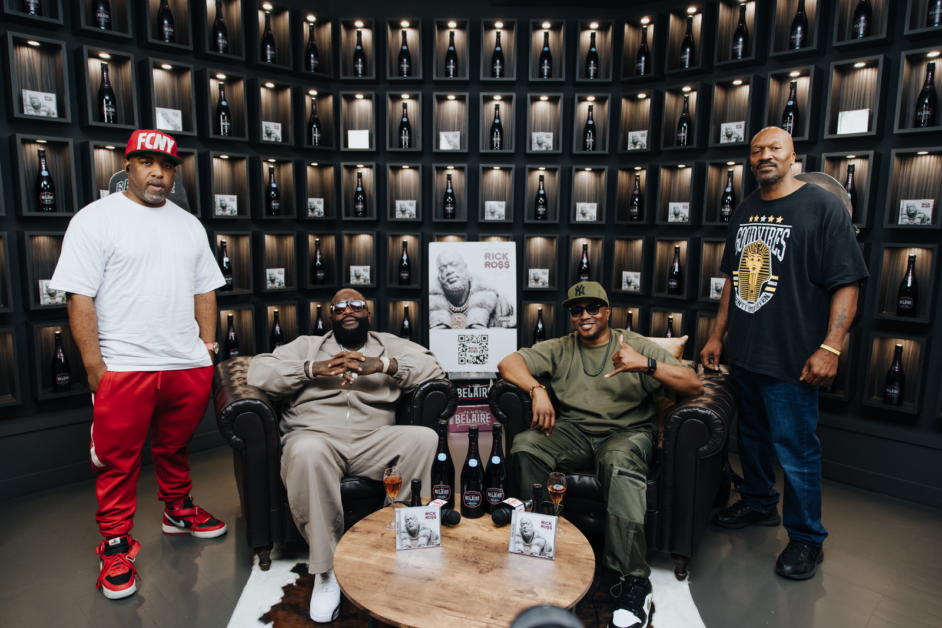
Why Physical Music Still Matters
AllHipHop: I noticed something sitting here.
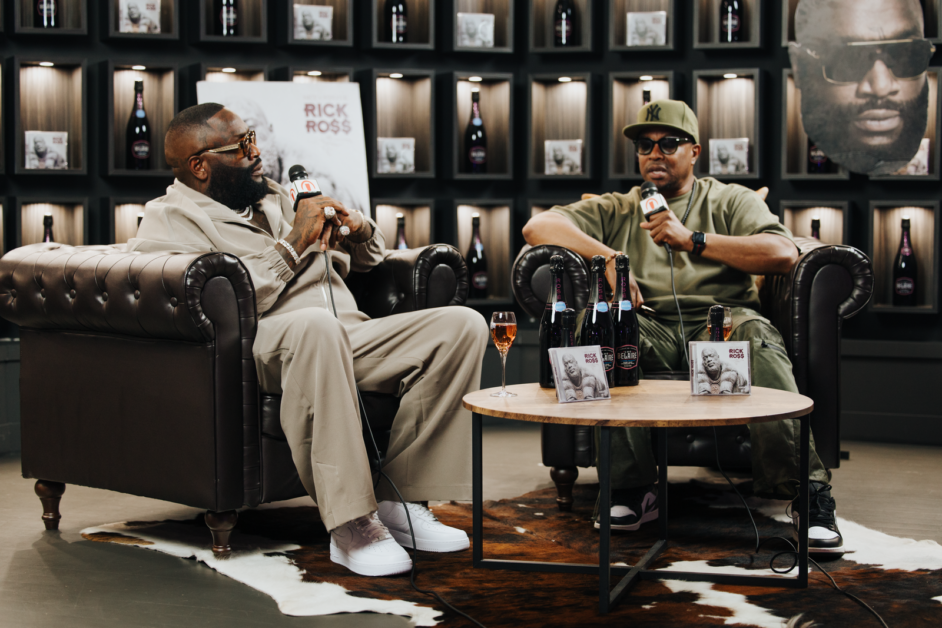
You still have an actual CD. That’s becoming rare these days.
Rick Ross: Physical.
Absolutely.
People can go to SetInStoneWorld.com, get the CDs, the vinyl, the exclusive merch.
I’m trying to bring that feeling back.
AllHipHop: What feeling?
Rick Ross: Man…People standing outside Best Buy for hours waiting on release day.
I remember that. Before I even got there, they were lined up waiting to buy my album. That energy? Nothing compares to it. If I can recreate even a little bit of that… that’s special.
No Regional Politics
As we talked, Scarface was playing through the speakers in the room. I smiled because I realized something. Ross and I came from that same era where great music mattered more than where it came from. Brad Jordan aka Scarface has impacted me in ways I’ll probably never reveal.
AllHipHop: Scarface was playing before we sat down.
That made me think… you’re from Miami, but your influences always felt bigger than one city.
Who were you listening to back then?
Rick Ross: Everything.
I never chose sides. If the music was dope…it was dope. Scarface. Ice Cube. BIG. Rakim Hov It never mattered where somebody was from. If it was fire, it was fire.
AllHipHop: That’s refreshing because nowadays people talk about regions all the time.
Rick Ross: That never mattered to me.
Still Creating
AllHipHop: You’ve done something that’s incredibly difficult.
It’s one thing to stay around for twenty years. It’s another thing to keep making music people actually care about. What’s kept that creative fire burning?
Rick Ross: Because I still love this.
I still love waking up. I still love getting fly. What jewels we wearing? What car we driving this weekend? That’ll never leave me. Making music feels just like that. I’m speaking for the people that think like me. The people that know the purpose. The people that know the plan.
Reimagining Port of Miami
AllHipHop: I was fortunate enough to be at the opening of the Port of Miami anniversary tour.
It didn’t feel like a normal rap concert. It felt… elegant. There was an orchestra. Everybody came dressed like they knew they were attending something special. Was that your way of bringing your audience into your world?
Rick Ross: That’s exactly what I wanted. Twenty summers?
We couldn’t just do another concert. We had to make a memory. So we brought out the full orchestra. A full Black choir. We did it with a small independent company. It wasn’t about trying to break records.
It was about honoring what Port of Miami meant to the culture. At first I only wanted to do a handful of cities. Then it kept growing. That’s beautiful. Twenty years later…people still want to celebrate that music.
Coming Up In Part II
Twenty years of success didn’t happen by accident.
In Part II of our conversation, Rick Ross opens up about failure, entrepreneurship, buying franchises, the importance of betting on yourself and why he believes you have to be “a little delusional” if you want to build something extraordinary.