



This post was originally published on this site.
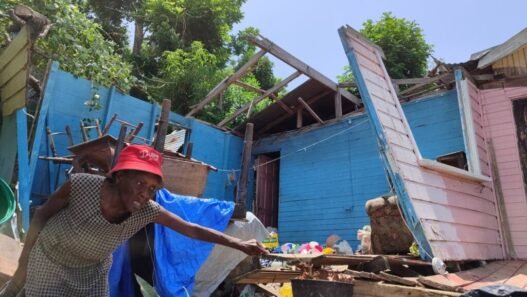
THE controversial Cooper’s Pen demolition has revived a brisk discussion on the stress and struggles that come with being a property owner. Annual insurance payments, maintenance, legal fees that come with passing the land to your heirs or dislodging squatters are some of the possible costs for those who operate within the formal system and play by the rules.
Jamaica Observer’s Real Estate on the Rock turned to economist Dr Damien King, along with O Dave Allen — executive chairman of an organisation which for years has agitated for the working poor to be land owners — for their views on whether it is practical for everyone to own a piece of The Rock.
Read on for their views in a lightly edited Q&A.
Does it make sense, economically for us to all own a house?
Economist, Dr Damien King: One of the things that it is helpful and constructive for people to do is to separate emotional desires from investments. Once you can make that separation, then it shows up in a number of different places.
The first one is in the desire to own your own home. When you think of what is the appropriate place for you to live at a certain stage of your life, that’s one issue. A second issue is approaching real estate as an investment. Those are two different objectives, and they are unlikely to coincide in the same property.
Suppose, for example, that you’re a single person and you really only need a studio or a one-bedroom, but you have some extra change because you’ve been saving and you can afford a three-bedroom apartment. Don’t under-invest and buy the studio or the one bedroom because that is what you want to live in. Buy the three bedroom and don’t live in it, because [if you do] you are wasting income.
Buy the three bedroom, rent it out, and then rent the one bedroom for yourself. This way you have surplus income that you can then continue to invest and continue to accumulate.
Another application of the same principle is that you need somewhere to live, and you want to invest, but all you can afford is a little piece of land somewhere that doesn’t have any structure upon it. If you are somebody who is not relatively wealthy, then it’s not a good idea to have a non-earning asset, which is what land is. An apartment you can rent out, stocks pay dividends, bonds pay interest, but a piece of land does nothing except rise in value at the same rate that most of the properties are rising anyway, so you don’t end up with a bigger stake of property. So again, if you are thinking of land as an investment, then it is hardly ever a good idea to invest in a non-earning asset.
With every investment, you have to think of the net return, not the gross return. Owning property does mean that it comes with costs: the cost of maintenance, the cost of having to fix the plumbing, and the cost of renovating every once in a while.
My point is, you need to separate your emotional needs from your investment needs. If you were to decide to under invest because you want to satisfy an emotional need, then that is your decision to make. But don’t confuse it with an investment.
What drives the desire to own property even when you cannot afford to insure it, maintain it; in other
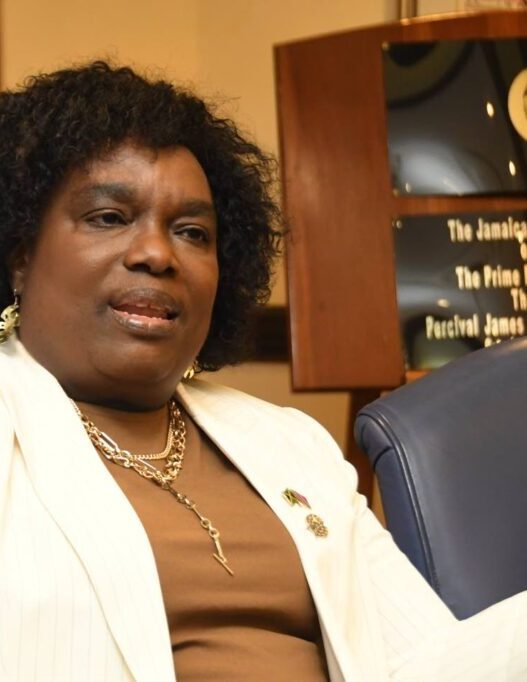
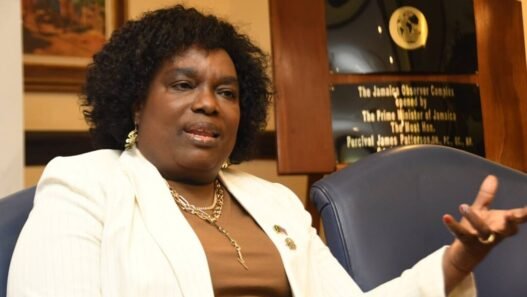
Executive director, Community Organisation for Management and Sustainable Development (COMAND), O Dave Allen: I want to make certain things very clear. Since 1995 we have been working with informal communities, but we do not support squatting. Squatting is the most inefficient way of community formation.
We were hoping by now, after Operation Pride, the business of squatting would be behind us, and the Government would have created pathways for the working poor to access land, not so much housing, because the people have developed a way of providing their own shelter solutions. Too many of our people are operating outside of the formal processes.
Many have very little confidence in the banking system, in the mortgage arrangements, they have a different culture which we are not working with. Part of that culture is incremental development, where they start small and expand over time.
We have to create a pathway, and we have to work with the culture and the needs of the people. We are imposing a sort of middle-class approach to development and on to the masses of the people.
What we are advocating for is not necessarily for government to provide housing solution, but to provide — using State land, Crown land — sites and services. The country needs some order and some discipline and [that approach] will provide that order.
The cost of rental, the limitations imposed on them by landlords, these are some of the reasons people squat. The rapacity of some landlords, the treatment you get when you are a tenant, the insecurity that is associated with tenancy are all reasons people squat. They want to get rid of the landlord, they want a place for themselves. But importantly, when you start to build your own house, you will have something to leave for your children.
We should encourage ownership because this is one of the ways to break intergenerational poverty — you have something to pass on to the next generation.
The idea that people who cannot afford to maximise the asset should not buy land is a proposition that I do not necessarily support. People who have ambition, the working classes, would ensure that their children have a start and are better off than themselves. And if that is not the case, it is not their fault; we have to look at the society that restricts and limits people’s growth.
Land is the basis of our wealth. It is the means to which we can put an end to intergenerational poverty, and we are encouraging government to move ahead of squatting. It’s not easy to squat, you know. You can’t just go there, poor, have no means, no income, and just go squat. You have to buy about 1,000 building blocks and put on the land, put some stone on the land, put some sand on the land, and when you have it ready to build you put some steel on the land. If you do not have those means, you can’t go take land. You can’t just fence up land and have it there indefinitely. Somebody will knock it out of your mouth. You have to have some means by which you can start building.