


This post was originally published on this site.
To the hotel empire that he built, the late Gordon “Butch” Stewart has bequeathed a fighting son, every bit as patriotic and determined and every inch of him the visionary he was.
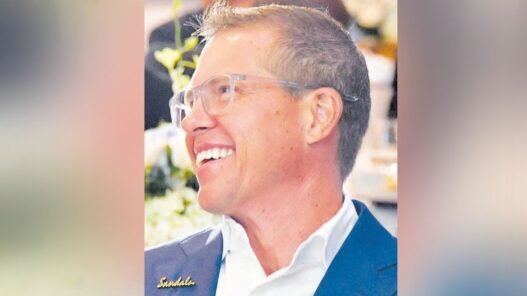
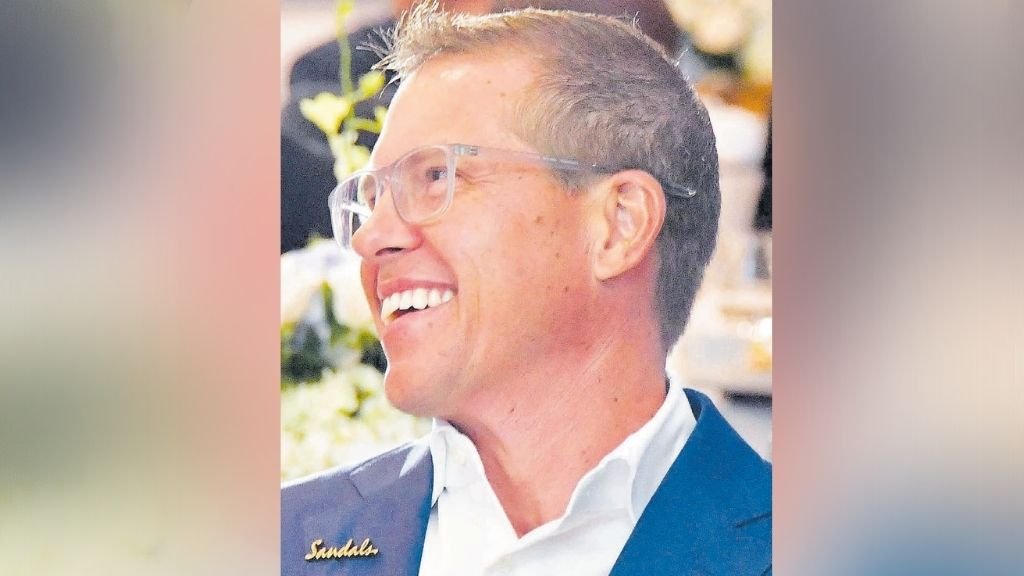
In probably his most comprehensive interview on local soil, Adam Stewart, the young executive chairman of multiple award-winning Sandals Resorts International (SRI), sat with Money Media’s Kalilah Reynolds recently and gave Jamaicans an all-embracing view of the man who helms the Caribbean’s leading resort chain.
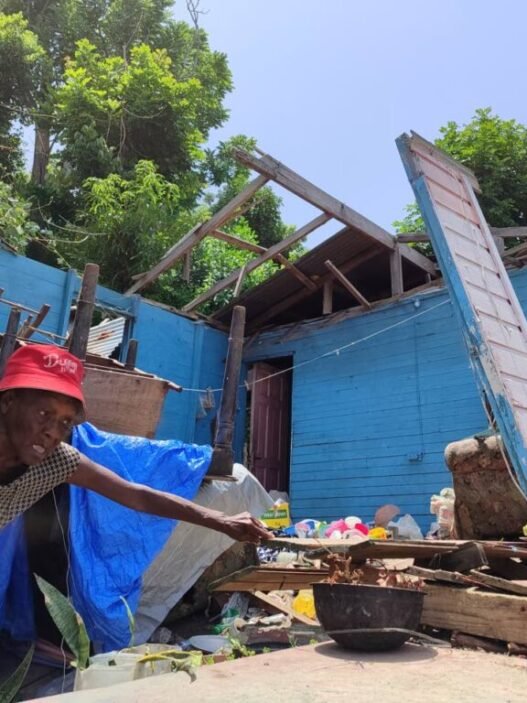
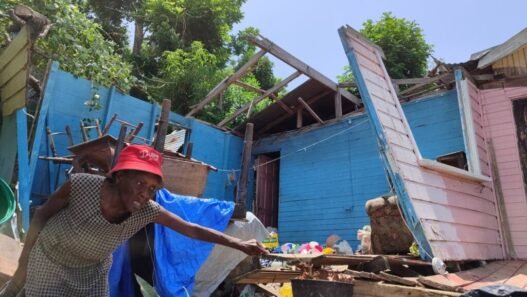
Among the areas he covered, Stewart gave an account of the battle he and his team — ‘the army’ he likes to call them — waged with the mightiest storm Jamaica has faced, Hurricane Melissa, which threw her merciless Category 5 winds at south- and north-western Jamaica last October, leaving devastation yet to be adequately described.
On just three hotels alone Sandals will have to fork out an estimated US$200 million to fix the carnage left by Melissa, he disclosed. But as he had seen his father done so many times before, Stewart grabbed the opportunity to take the resorts to places not even the great Butch had gone before.
Asked what was his reaction when he first toured the battered Sandals South Coast in Westmoreland, Sandals Montego Bay, and Sandals Royal Caribbean in St James, Stewart acknowledged he had hoped not to see the magnitude of the destruction that was to come.
“You know, when hurricanes are approaching, there’s always a hope that it won’t actually make landfall or if it does…we’ve had hurricanes in the past that came close and we got away with it. But we saw Melissa’s pressure building and it was just catastrophic to watch what happened in the path of the hurricane,” he recounted.
“Once we got out into the field we saw the destruction in the communities. We saw the destruction to people’s homes and, of course, our various businesses. You just had to stop and sort of, you know, thank the Lord for those who were left unscathed.
“You knew you had to do your part in picking up the pieces for those who were heavily affected, not only our team members in our businesses, but our communities surrounding our fishermen, our farmers, the entire ecosystem of commerce.
“But we are here now and we’re building back, and you’ve seen a coming together of public and private sector, you’ve seen the NGOs [non-governmental organisations], you’ve just seen everyone come together.
“It was extraordinary to me how much love Jamaica had out there in the world, the international marketplace that deployed their military, that deployed aid, allies from all over the world.
“I’ve often said Jamaica has always been a gift to the world. And we felt like we knew that, but we were reassured about that when we saw the generosity of the many who came to Jamaica’s rescue.”
Sandals South Coast took a direct hit from 252 miles per hour winds, with 900 guests and more than 1,000 team members in-house,” Stewart noted, adding: “It was extraordinary to witness the Jamaican people and the commitment to their industry, to their company.
“We had two hits in Montego Bay — Sandals Royal Caribbean and Sandals Montego Bay — our first and second resorts in the chain.
“Hotels are things that you open them and God willing you never close them again. They’re operational 24/7; 365 days a year. You tend to do renovations often on the fly, major renovations maybe once every 20-odd years, sometimes 30,” he told his interviewer.
Stewart said the first decision they took was to acknowledge that “our team members are going to need us now like they’ve never needed us before”.
“We decided that however long it would take to recover the resorts, we’d keep our team members on and pay them their salary. We would keep benefits — medical, dental, pension — all benefits flowing to the team members.
“We saw the love that came off our resort. I was walking the resorts looking at team members, knowing that many of them had lost absolutely everything, and yet they were standing in my business and taking care of our company. So the most important decision was to ensure that our team members were safe.
“We also had to make sure that our customers were safe. As I mentioned, we had 900 customers that could not leave. We do everything possible when we see something this disruptive coming to get visitors out so that they’re not stuck.
“And, of course, we want our team members to be with their families and to be where they need to be. So I think the biggest decisions, just speaking frankly — and I know people love to talk about the business element of things — was the quick decisions that needed to be made to protect team members and customers. So 100 per cent of customers stayed in Sandals or Beaches Resorts completely free of charge for as long as they needed to…because we couldn’t get commercial airlines to come in fast enough.”
Beyond staff and guests, Sandals had to think of the country as a whole, Stewart said.
“We supported by having JPS [Jamaica Public Service Company] in-house. We had the police and JDF [Jamaica Defence Force] in-house. We had the air traffic controllers in-house, 100 per cent free of charge…People like team Rubicon and many of the NGOs stayed in-house with us free of cost.
“These are big financial decisions to make, but the reality is that the faster Jamaicans can get back in business…what is good for the goose is good for the gander. And Sandals has always adopted a strategy of thinking sort of nation first, Jamaica first.
“And when a hurricane hits…out of bad we always say can come good. And the good in this was that we were already thinking through how to transform these resorts and take them to the next level,” he said.
“Sandals Dunn’s River [near Ocho Rios] was an example of Sandals taking an incredible asset, an asset built in the late 1950s, ‘sandalising’ it as we call it, putting in all the new features, amenities, making sure it’s completely relevant to today’s consumer, with all the support services for our team members to excel on the front line in their jobs.
“So we made these decisions fast and we’ve announced that we’re spending over US$200 million on these three resorts in a complete transformation, taking them to what we call Sandals 2.0, which is just the next level of vacation experience and the Sandals model.
“These were tough business decisions, but…we made them within hours of understanding what had actually happened. And I’m really proud that we made those decisions, and I stand by them today,” Stewart stated.
Commenting on how disaster-prepared Sandals is, the executive chairman said that as the largest regional hotel chain, operating in 10 islands across the Caribbean, it was expected that invariably every year “you get touched by some kind of weather event”.
“We have an incredible health and safety protocol. The Sandals team, the army as I like to call them, they are trained and baptised in this protocol what to do. So we have full standby power generation. We are able to have multiple days of food and water.
“You just keep refining year after year. I think the biggest thing we learned this time around was just the knock-on effect of how something this destructive [can affect us].
He said tourism had by no means fully recovered, noting that Sangster International Airport, where most visitors enter the island, is down nearly 27 per cent year-over-year in arrivals, forcing huge expenditure on marketing and training.
“Of course, you can just never fully anticipate everything that will come at you. I think that a lesson you have to learn is that you have to be as prepared and as ready for what you can’t anticipate and be totally agile in how to recover,” Stewart said.
As for the November and December timelines he has given for reopening the three resorts, Stewart was philosophical: “We will open. We have to open. We have no choice but to open. I mean, these hotels are going to be unrecognisable when you walk into them, and I hope it makes Jamaica proud.”